Small law firm and solo attorney websitesThree pages, done right.
A solo attorney doesn’t need forty pages. You need three that answer the four things every client checks: who you are, what you handle, what it costs to start and how to reach you. Five if there’s more than one of you. $3,500 or $6,000, paid once, and the firm owns the site the day it launches.
Every page earns its spot.
Here’s what goes on each page at the two sizes small firms pick most. No filler pages, no page that exists because a template had a slot for it.
One lawyer, one practice
Mark $3,500
Up to 3 pages · 2 to 3 weeks · 75% at signing, 25% at launch
Home
Who you help, in their words. The first step. Your phone number, big enough to tap.
You and the practice
Your story in plain sentences, where you're licensed, what you handle and what you send elsewhere.
Fees and contact
What the first consultation costs, what to bring, how fast you call back. The form and the map.
A few lawyers, a few practices
Signature $6,000
Up to 5 pages · 3 to 4 weeks · 50% to begin, 25% at design approval, 25% at launch
Home
The one line that says who you're for, and the first step.
Practice areas
Each area in the words a client would search, with what happens first.
The attorneys
A real bio for each lawyer, with a photo that looks like them on a good day.
Fees and the first meeting
Flat fees, hourly rates or a free first call. Whatever you charge, said out loud.
Contact
Phone, form, hours, parking, and who answers.
Two questions. One size.
Tap your answers. It suggests a size and the pages that go in it. Nothing you tap leaves this page.
Start here
Mark $3,500
Up to 3 pages
- Home: who you help, the first step, your number
- You and the practice: your story, where you're licensed, what you handle
- Fees and contact: the first consultation, what to bring, the form, the map
A starting point, not a quote. We settle the page list together on the kickoff call.
Small firms. Not small sites.
Four firm sites at the sizes a solo or small firm buys. Each one is live and labelled. Click around.
Thackwell Counsel
One business lawyer in Durham who works by the month. Three pages: home, how a month works, and the lawyer. The desk where you build your month is the whole pitch.
Merrow Teague
Two family lawyers in Tacoma. Five pages: home, situations, parenting schedules, the attorneys and contact. Small firm, very specific site.
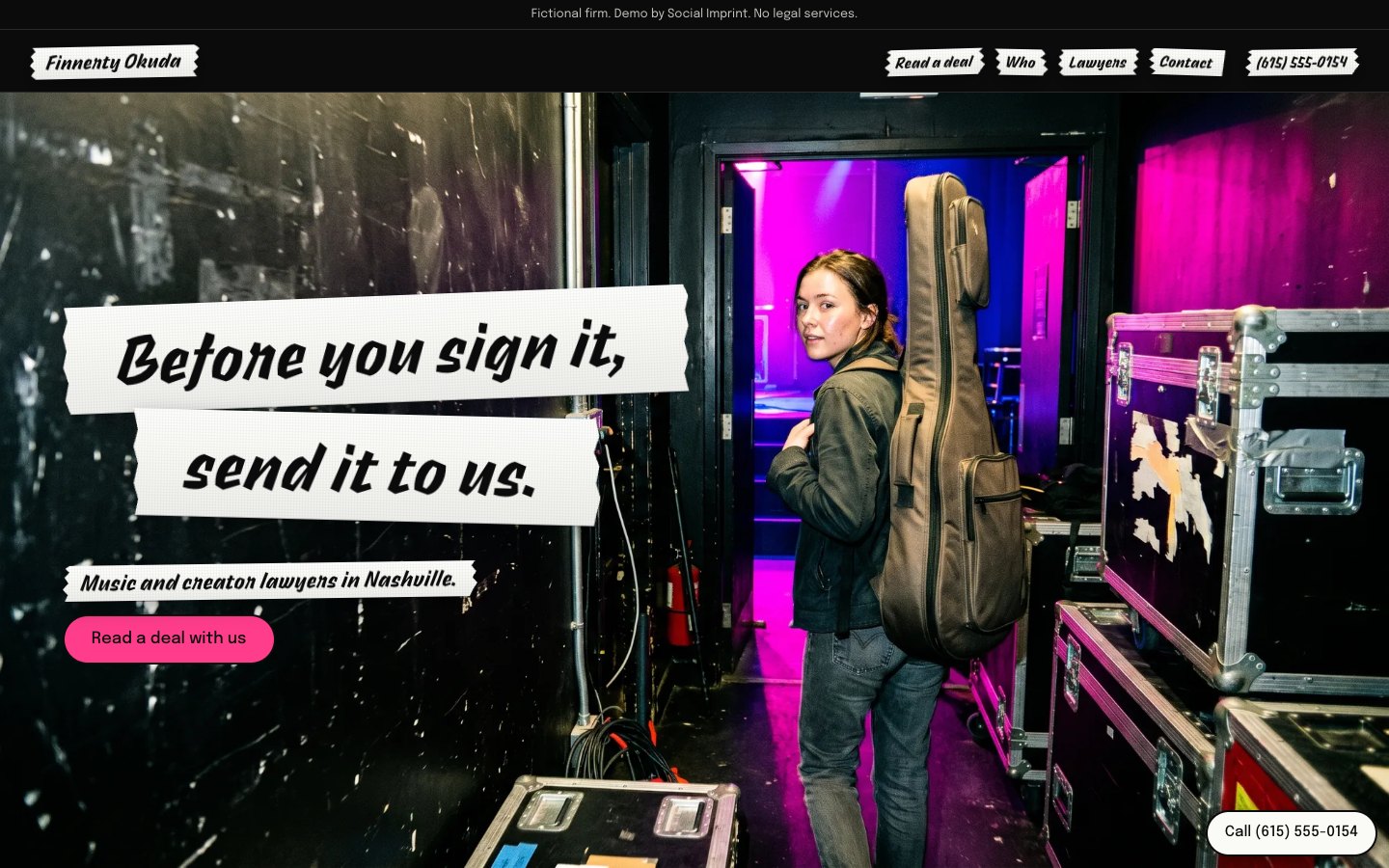
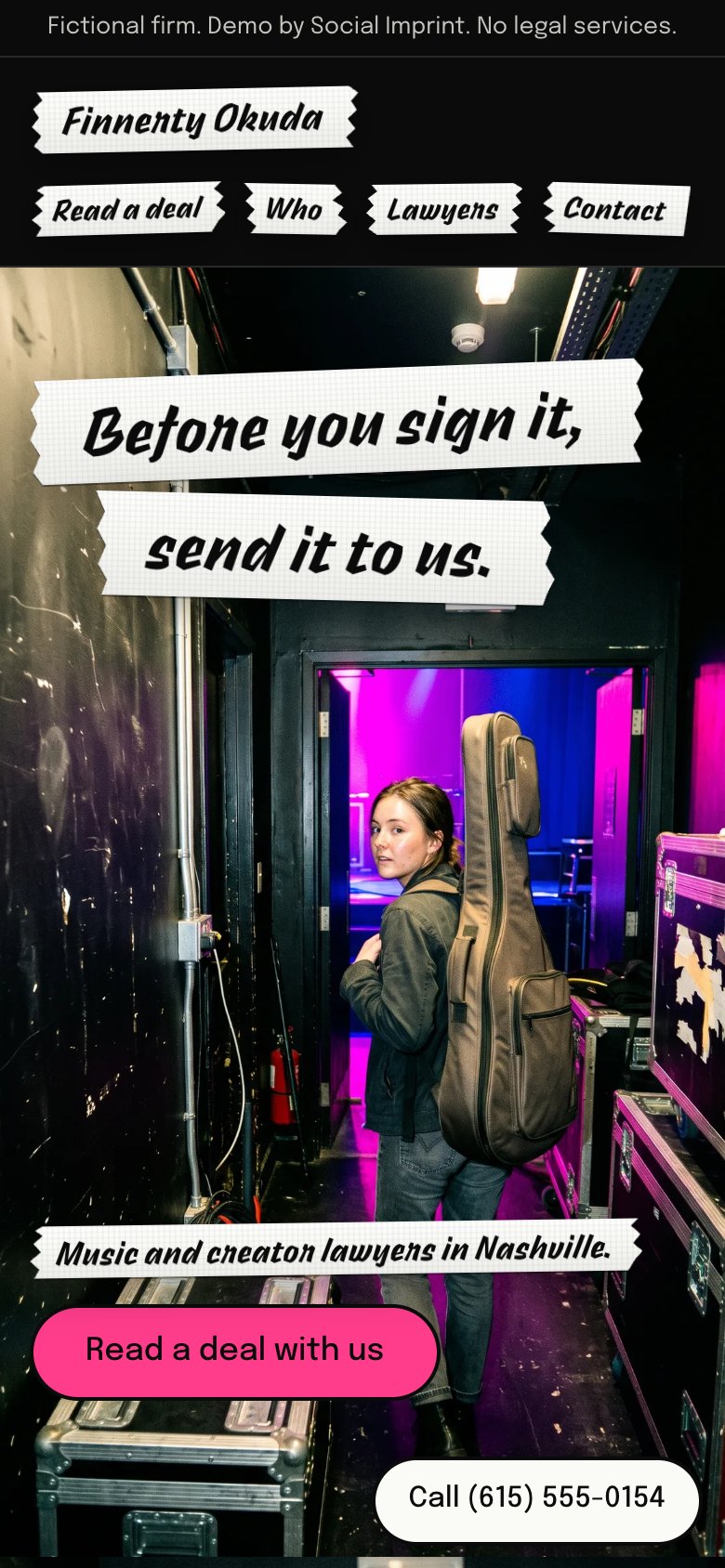
Finnerty Okuda
A music and creator law firm in Nashville. A sample contract you can tap, with the lawyer's notes in the margin. Five pages for a niche nobody else serves the same way.
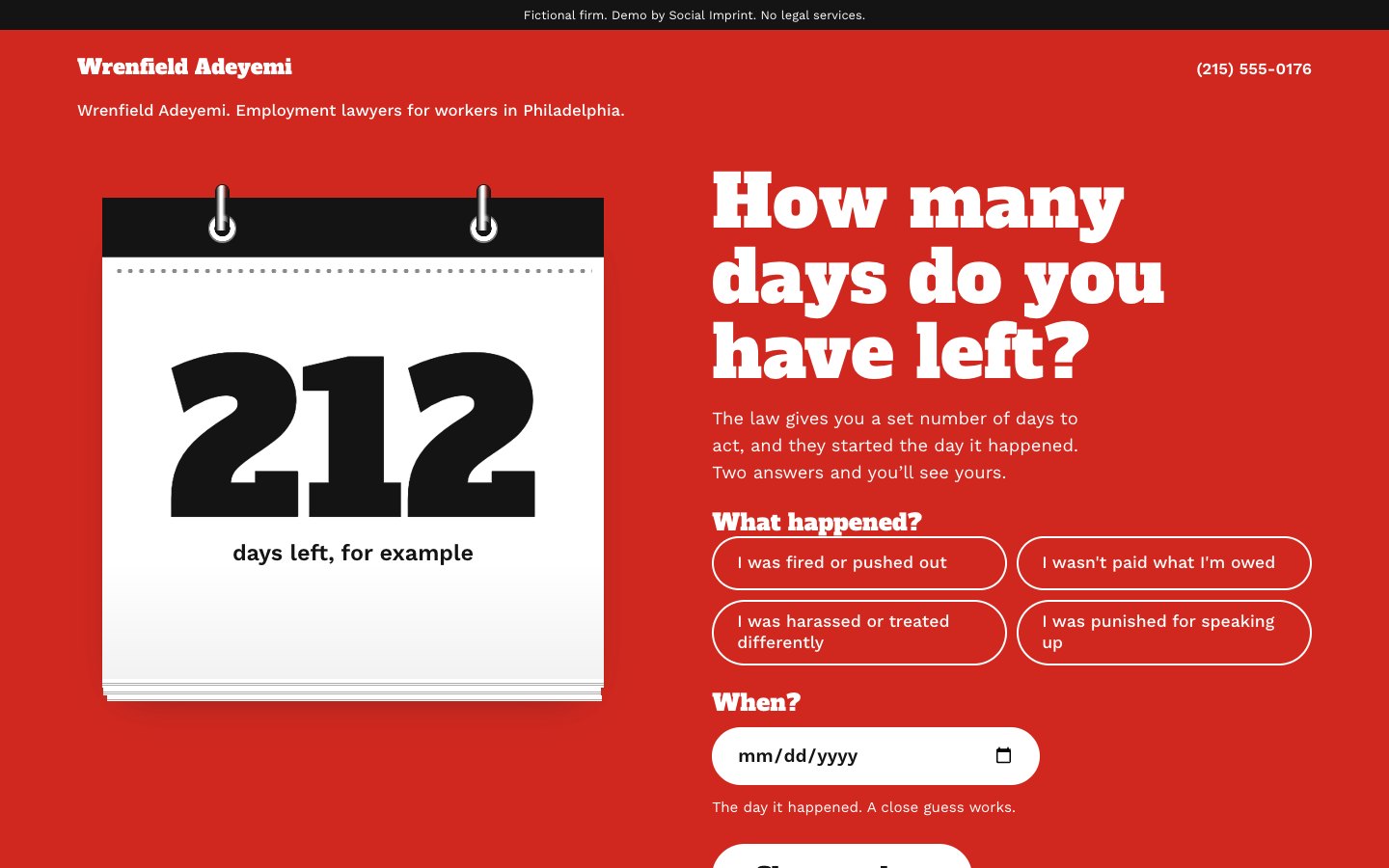
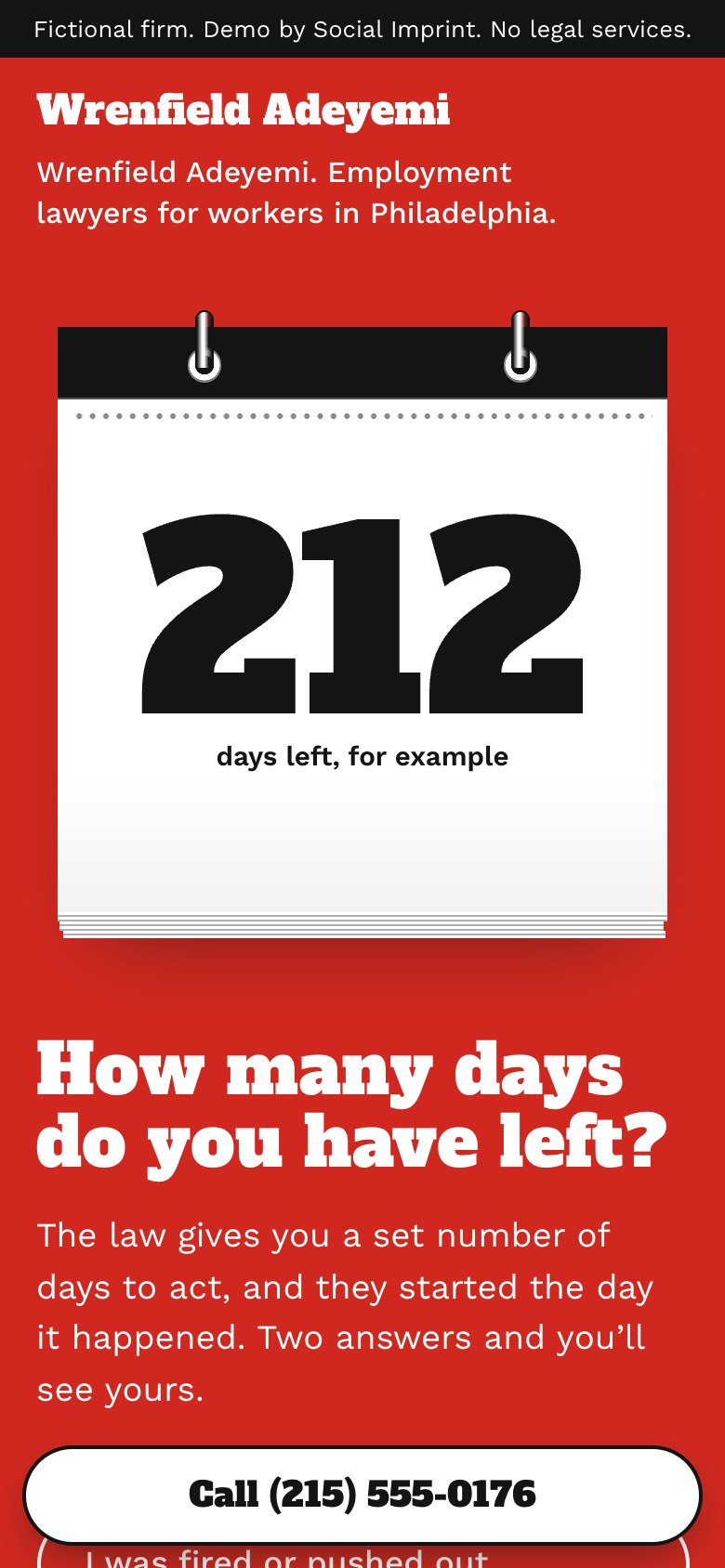
Wrenfield Adeyemi
An employment firm in Philadelphia that needed one page to do one job. Pick the day it happened and see how many days are left to act.




What you can skip.
Small firms copy big firm sites and end up with big firm problems. Pages nobody reads, sections nobody updates. Leave these out.
A blog you'll never update
An empty blog dated two years ago tells a client the lights are off. Put the answers on the pages instead.
A page per tiny service
Ten thin pages read like a directory. Three solid pages read like a lawyer.
Stock photos of gavels
Clients know what a courthouse looks like. They want to see you.
A long list of awards
If they matter in your state and your bar allows them, one line does it. The rest is noise.
You’re the brand. Act like it.
At a small firm, clients hire the lawyer, not the logo. So the site leads with you: your name, your face, the way you explain things. Referrals look you up before they call. The site is where they decide whether the person they heard about is the person they want.
Every build includes the custom design, every word of copy, the technical SEO foundation, your Google Business Profile set up, analytics and contact forms. Luis Paoli, who founded Social Imprint, designs and builds every site. You approve every word before it goes live, including the licensing lines and the notices your state asks for.
Want it looked after? Care plan, $199 a month: hosting looked after, forms checked, and up to 5 small changes a month. Cancel anytime. The site stays yours.
The full list, add-ons included, is on the law firm pricing page. Already have a site you like the bones of? A law firm website redesign may be all you need.
Questions small firms ask
How much does a small law firm website cost?
It's priced by pages and paid once. Up to 3 pages is $3,500. Up to 5 pages is $6,000. Up to 10 pages is $9,500. One page for one job is $2,000. No monthly fee to us. Hosting is in your name, about $20 a month.
Is three pages enough for a solo attorney?
For one lawyer with one practice area, usually yes. Home, you and the practice, fees and contact. Clients want to know who you are, what you handle, what it costs to start and how to reach you. Three good pages answer all four.
When does a small firm need five pages?
When there's more than one lawyer or more than one practice area. Each area deserves its own words, and each lawyer deserves a real bio. Five pages gives both room without padding.
What should a solo attorney website include?
Your name and face, the clients you help, the first step and what it costs, where you're licensed, your phone number on every page, and a short form. Plus the notices your state's advertising rules ask for.
Can I add pages later?
Yes. An extra page that reuses an existing design is $500. A page with a new design is $1,500. Moving up a size later works too.
Will clients find a small firm website on Google?
Every build includes the technical SEO foundation and your Google Business Profile set up. For a small firm, the profile and a site that names your practice and your city in plain words do most of the work. Our law firm SEO guide covers the rest.
Who owns the site?
Your firm does, from the day it launches. The domain and hosting are in your name. The care plan is optional and the site stays yours either way.
Nobody else has your fingerprint. Why do they have your website?
Take it back. It starts with a two-minute form, not a sales call.